


Design & Aesthetic
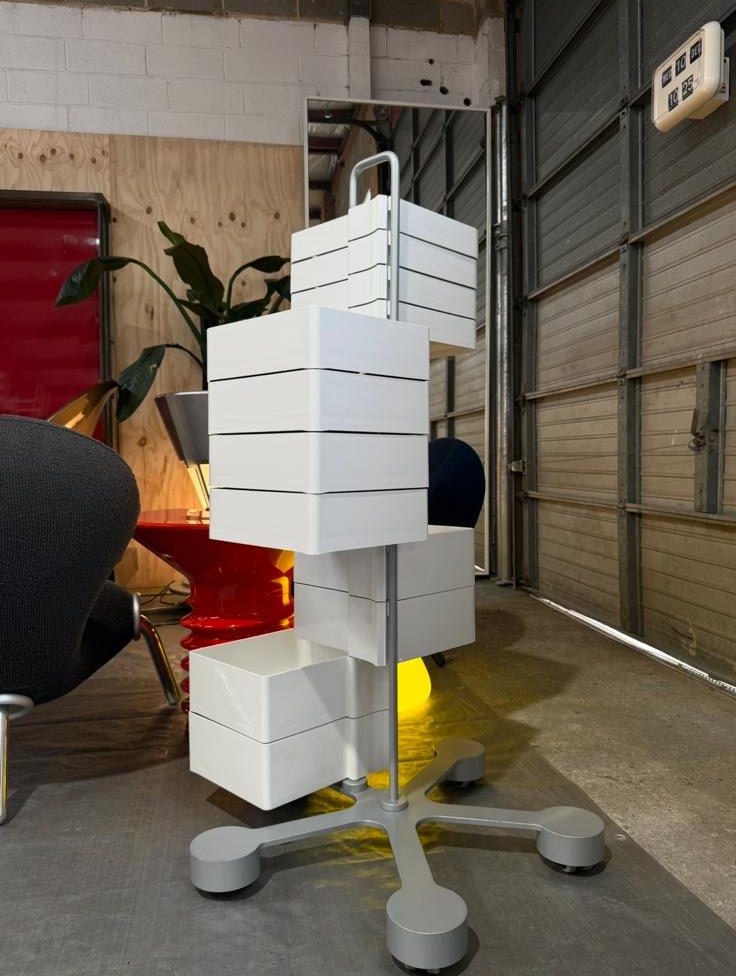
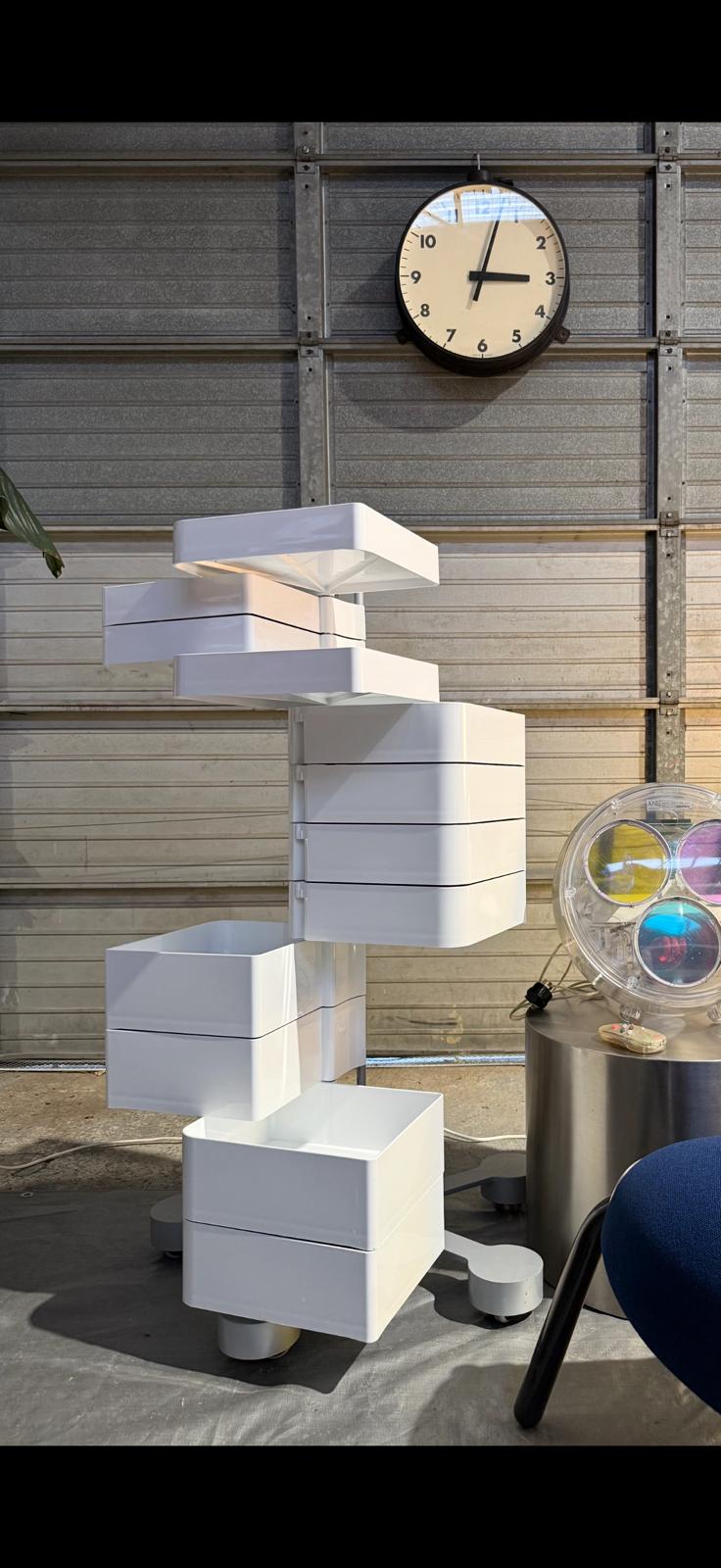
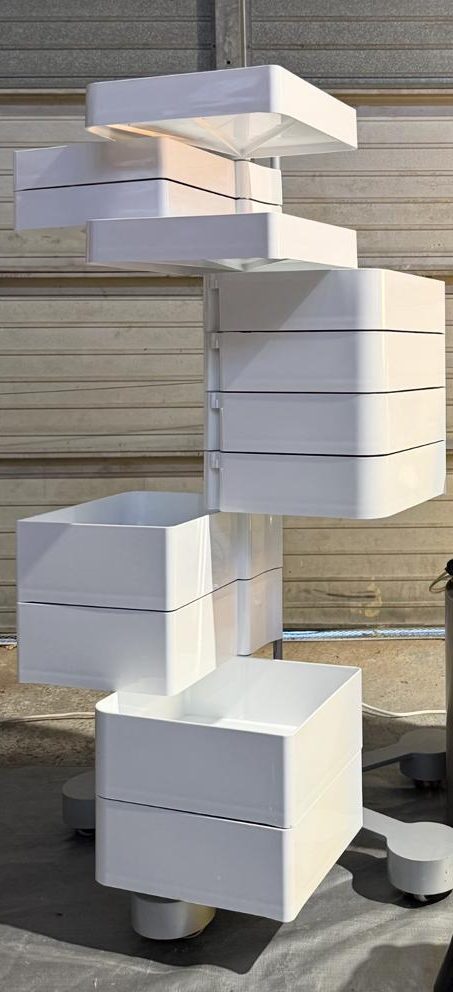
The Spinny Mobile Drawer Unit is defined by its vertical, tower-like form composed of stacked drawers arranged around a central axis. Each drawer can rotate independently, creating a dynamic and ever-changing silhouette that shifts depending on how it is used. The design has a distinctly futuristic and sculptural presence, reflecting Joe Colombo’s vision of adaptable, space-age living environments.
Materials & Construction
The unit is constructed from injection-moulded ABS plastic drawers mounted onto a painted steel central structure and base. It is supported by swivel castors, allowing for easy mobility. The drawers are typically produced in varying heights, stacked to create a compact yet highly efficient storage system. The use of industrial materials ensures durability while maintaining a lightweight and functional design.
Functionality
Designed as a mobile storage solution, the Spinny offers a highly practical system for organising small items in both domestic and professional settings. Each of the drawers rotates outward for easy access, allowing the user to customise the configuration depending on need. Its compact footprint combined with vertical storage capacity makes it particularly suitable for studios, offices, and flexible living spaces.
Concept & Inspiration
The design is rooted in Joe Colombo’s original concepts from the 1960s, particularly his interest in modular, mobile furniture systems such as the Boby Trolley. Spinny reflects his broader vision of creating adaptable environments where furniture responds to changing user needs, combining efficiency, movement, and flexibility in a single object.
Design Context
Reintroduced in 2004 by B-LINE, a company known for reviving important Italian design classics, the Spinny continues Colombo’s legacy of forward-thinking furniture. It aligns with contemporary lifestyles that prioritise flexibility, mobility, and multifunctional design, making it relevant across both residential and work environments.
Designer Significance
Joe Colombo is regarded as one of the most visionary Italian designers of the 20th century, known for his experimental use of materials and his radical ideas about future living. His work anticipated many aspects of modern interiors, particularly the need for adaptable, modular systems that maximise space and functionality.