

Design & Aesthetic
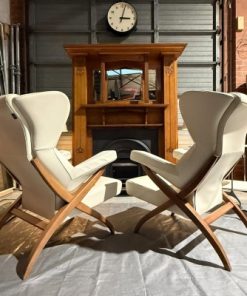
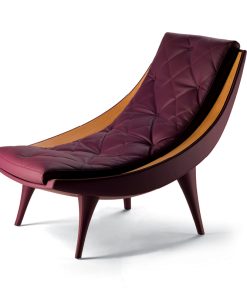
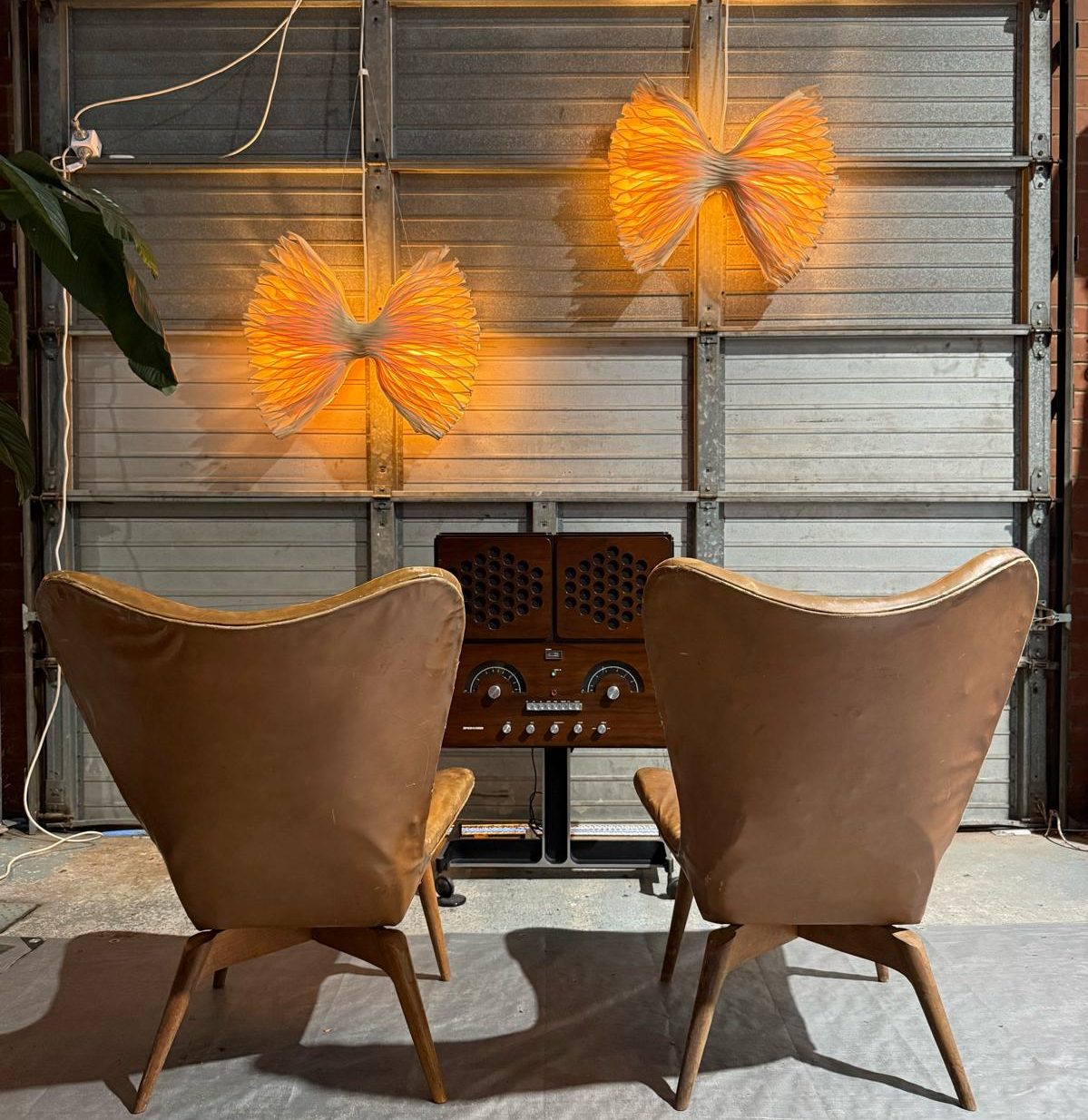
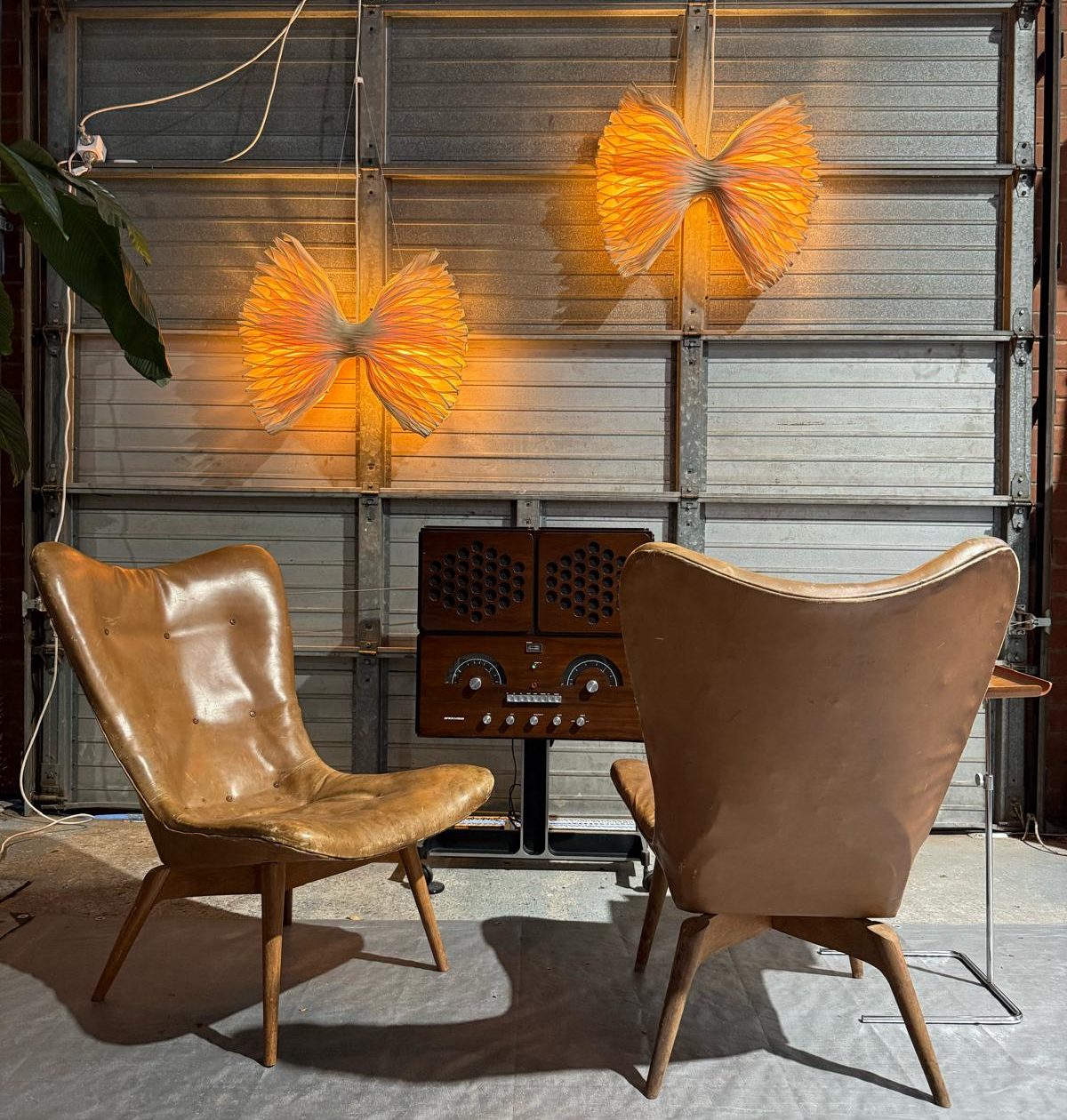
The chairs are defined by their smooth, flowing lines and integrated forms, often featuring curved backs and seats that appear as a continuous surface. The proportions are carefully balanced to create a sense of lightness while maintaining visual presence. Their aesthetic reflects a distinctly Australian interpretation of modernism, combining warmth with sculptural clarity.
Materials & Construction
Typically constructed with a timber internal frame, the chairs are padded with foam and upholstered in fabric or occasionally leather. Many models feature solid timber legs, providing both structural support and a visual contrast to the soft upholstery. The craftsmanship emphasises durability and comfort, with attention to proportion and finish.
Functionality
Designed as lounge seating, Featherston chairs offer a comfortable and supportive experience, with ergonomic shaping that adapts to the body. Their size and form make them suitable for a range of interiors, from residential living spaces to commercial environments, functioning as both everyday seating and statement pieces.
Concept & Inspiration
Featherston’s work was driven by a desire to create accessible modern design that improved everyday living. His approach focused on comfort, simplicity, and emotional connection, using organic forms to create furniture that feels intuitive and inviting.
Design Context
Produced primarily during the 1950s and 1960s, these chairs represent a formative period in Australian design history, when local designers began establishing a distinct identity. Featherston’s work played a key role in shaping this movement, bridging international modernism with local sensibilities.
Designer Significance
Grant Featherston is regarded as one of Australia’s most important furniture designers. His work is held in major museum collections and continues to be highly sought after by collectors, designers, and enthusiasts of mid-century modern design.