











Design & Aesthetic
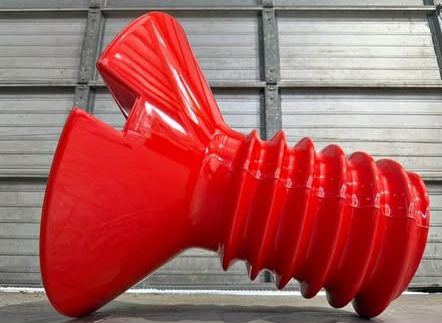
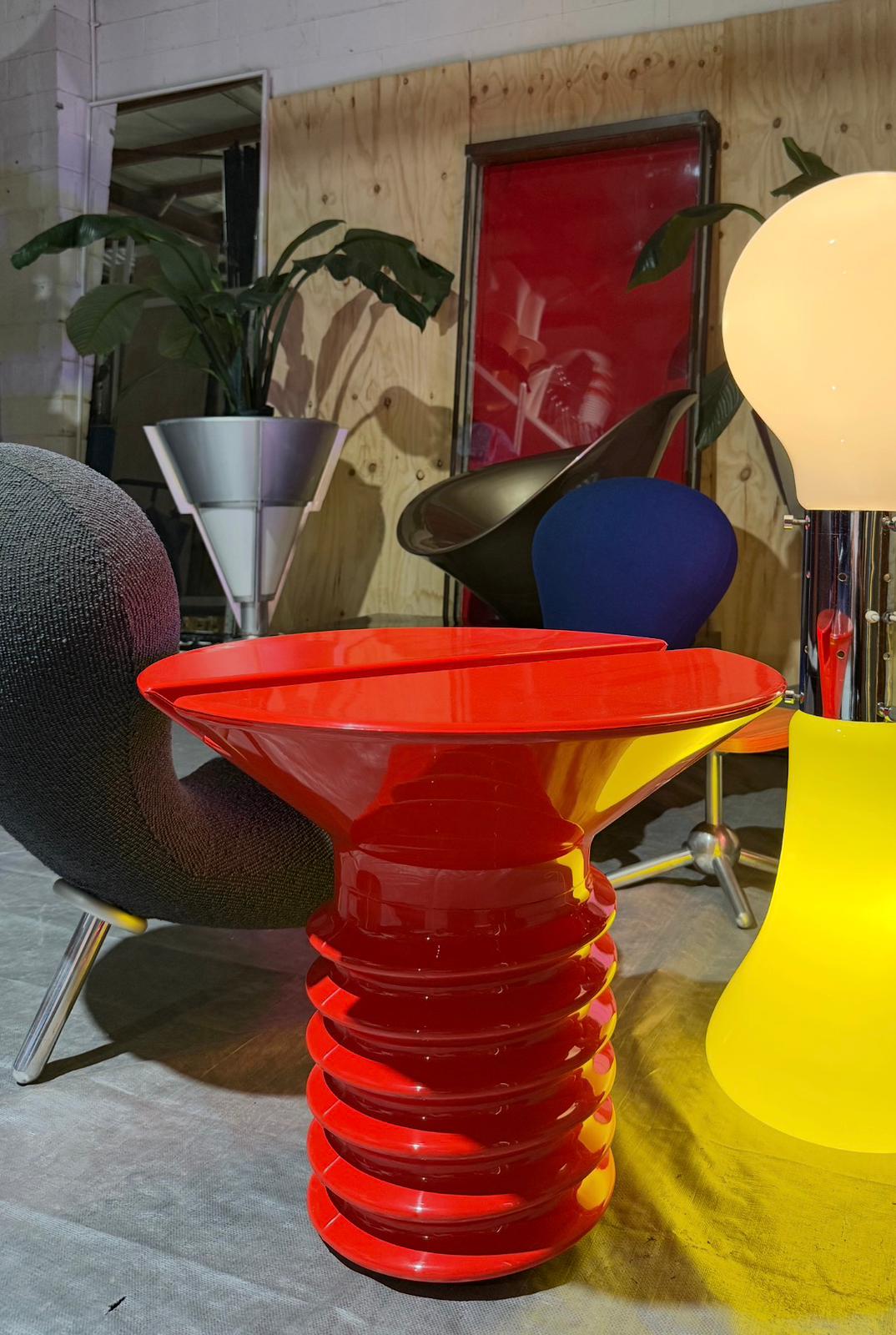
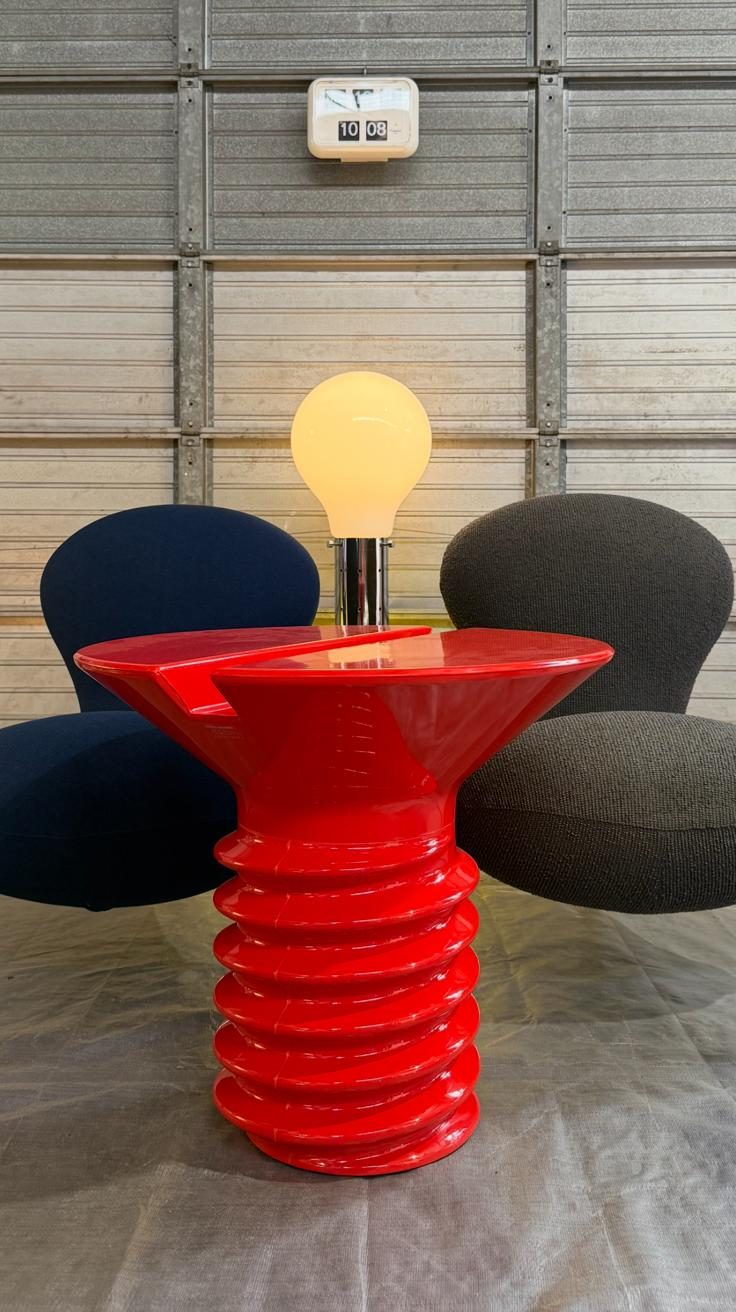
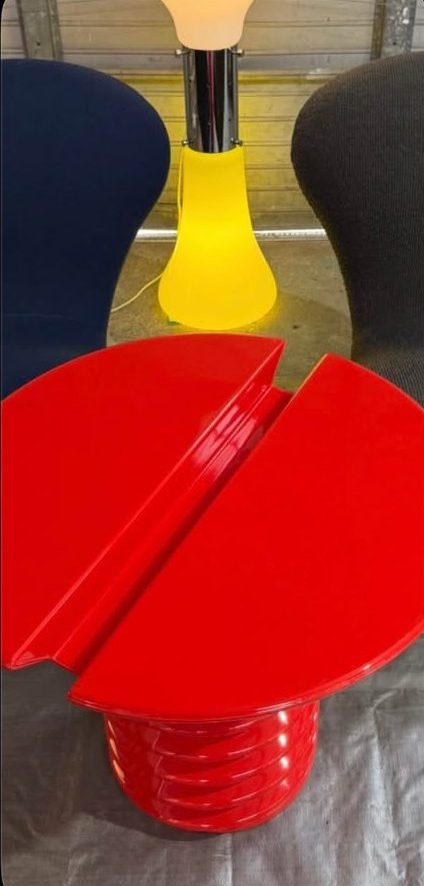
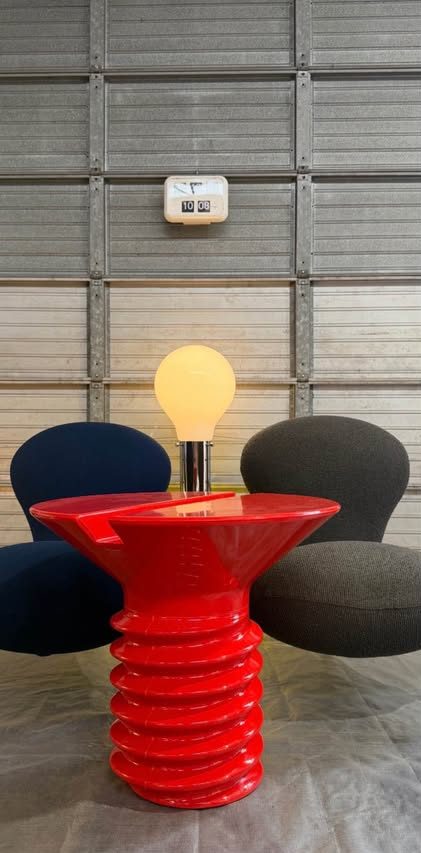
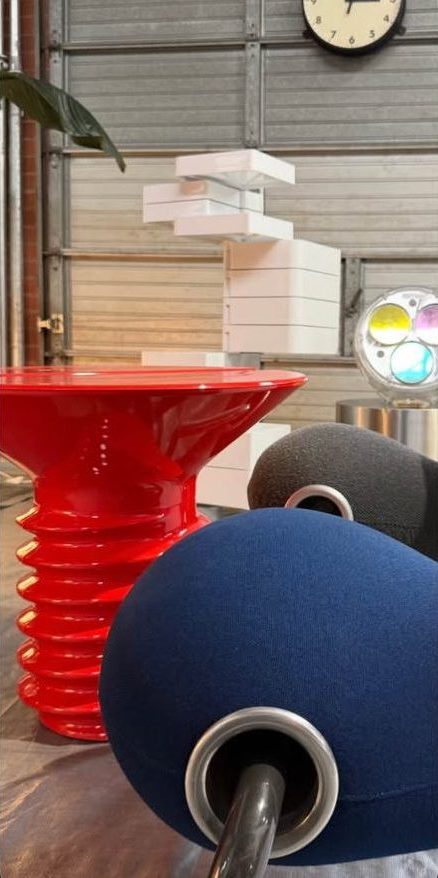
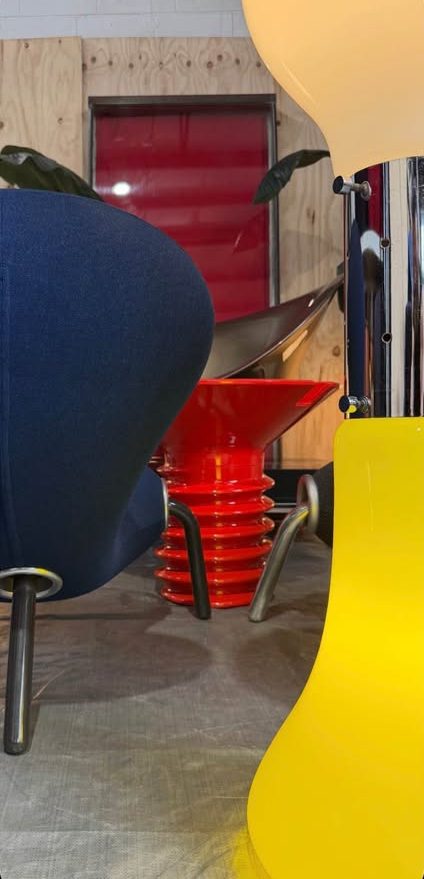
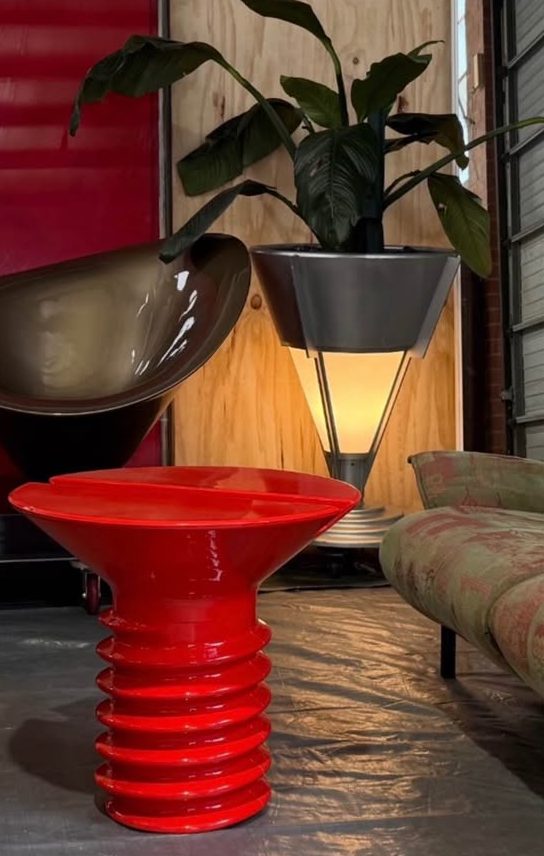
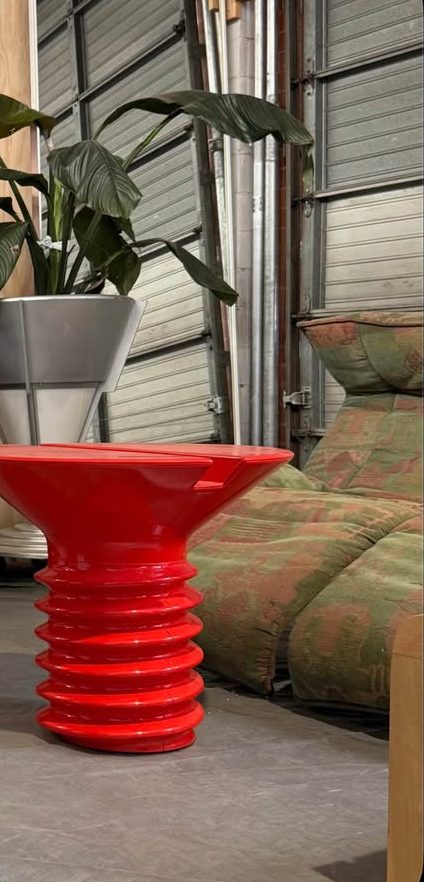
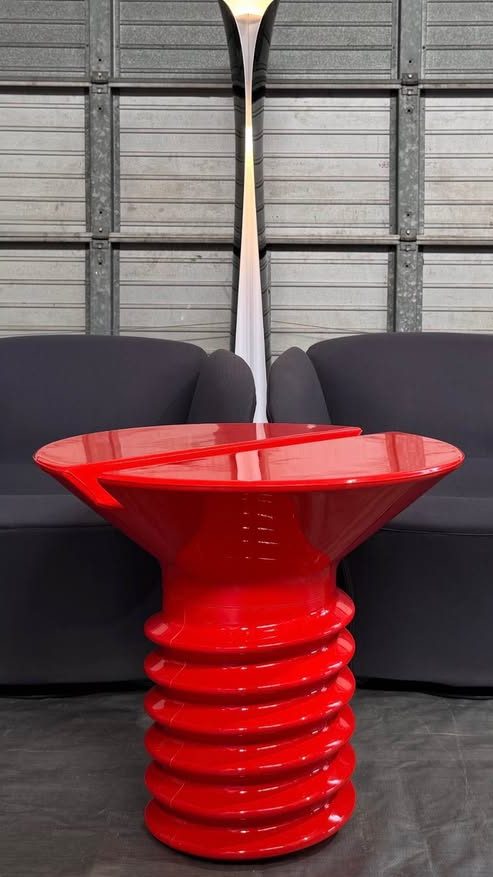
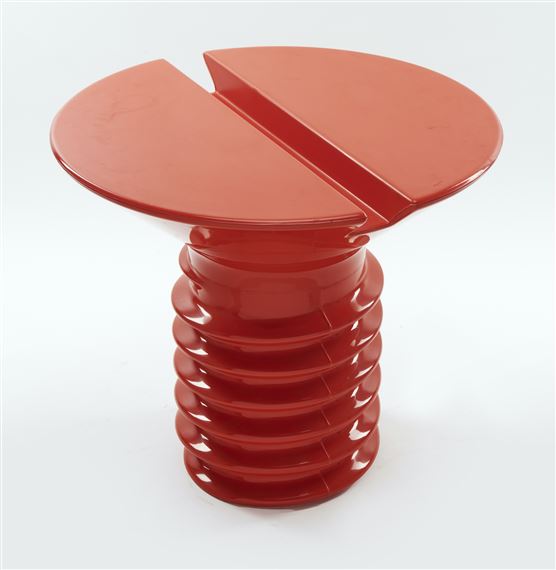
The Screw Table is defined by its bold and instantly recognisable form, conceived as an oversized screw with a circular top and spiralling base. Its sculptural presence transforms a familiar industrial element into a striking piece of furniture, combining humour with strong geometric clarity. The design embodies a playful yet refined aesthetic, characteristic of Eero Aarnio’s approach to form and visual identity.
Materials & Construction
The table is typically constructed from fibreglass-reinforced plastic, allowing for smooth, continuous surfaces and structural strength. The moulded production process enables the seamless integration of the spiral base and tabletop, resulting in a durable yet visually fluid object. The finish is often high-gloss or matte, available in a range of colours, most commonly black or white.
Functionality
Designed as a side or occasional table, the Screw Table provides a stable and practical surface while maintaining a strong visual presence. Its compact footprint and solid base make it suitable for a variety of interior settings, from residential living spaces to gallery and commercial environments. While fully functional, it is equally intended as a sculptural focal point within a space.
Concept & Inspiration
The design is inspired by the simple screw, one of the most ubiquitous yet overlooked components in construction and everyday objects. By enlarging and reinterpreting this form, Aarnio elevates a hidden functional element into a central design feature. This approach reflects his broader interest in reimagining everyday objects through scale, material, and context.
Design Context
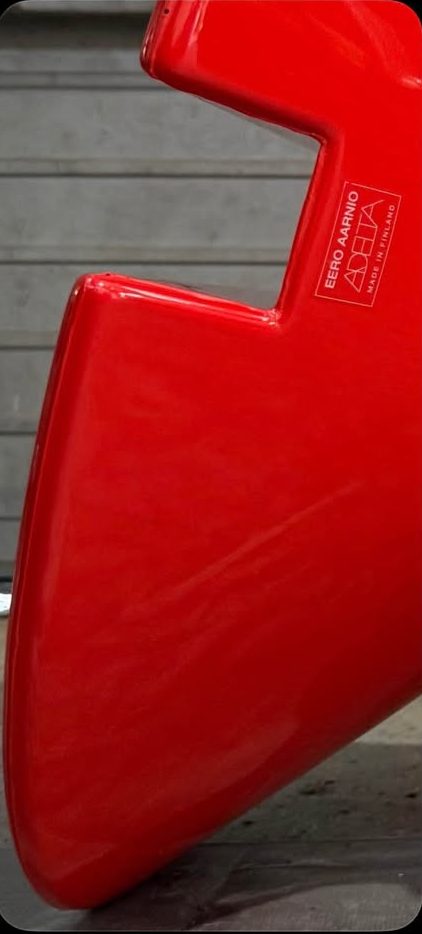
Created in 1991, the Screw Table emerged during a period when design embraced experimentation, symbolism, and playful reinterpretation of industrial forms. Produced by Adelta, a manufacturer closely associated with Aarnio’s work, the table forms part of a broader exploration of synthetic materials and expressive shapes within late 20th-century design.
Designer Significance
Eero Aarnio is one of Finland’s most influential designers, known for pioneering the use of plastics and fibreglass in furniture design. His work is characterised by bold forms, innovative materials, and a distinctive sense of playfulness, with iconic pieces such as the Ball Chair and Bubble Chair shaping the language of contemporary design.